wellness
Three Breathwork Techniques Barcelona's Eixample Residents Use Daily
Barcelona's Eixample may be one of Europe's most walkable grids, but life between its octagonal blocks still runs at a relentless pace, and respiratory science offers a fast exit route.
How we reported this
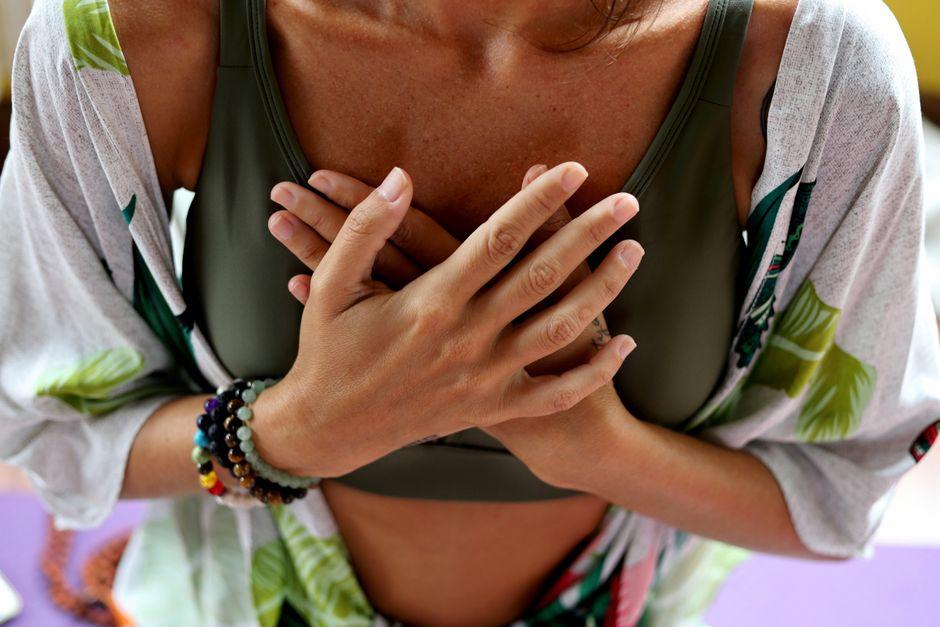
Take four seconds to inhale right now. Hold for four. Exhale for four. Hold again. That 16-second loop, box breathing, used by everyone from Navy SEALs to nurses at Hospital Clínic on Carrer de Villarroel, can measurably lower heart rate within three minutes, according to research published in Frontiers in Human Neuroscience in 2023. Breathwork is no longer a fringe pursuit. It is, increasingly, the most portable stress tool available to anyone with lungs.
Summer in Eixample concentrates pressure in specific ways. The neighbourhood's roughly 262,000 residents are squeezed into one of the densest urban grids in Europe, where July temperatures regularly hit 34°C and the August tourist surge pushes foot traffic on Passeig de Gràcia past 80,000 people per day. Hybrid working has blurred the line between the home office in a pis and the café terrace at Eixample Esquerra. Stress does not disappear when you close the laptop; it pools. Breathwork techniques work precisely because they do not require a studio, a mat, or a 75-minute slot in a diary that does not have one.
The science behind slowing down
The mechanism is straightforward. Slow, controlled exhalation activates the vagus nerve, which signals the parasympathetic nervous system to dial down the cortisol response. A 2021 Stanford study found that cyclic sighing, a double inhale through the nose followed by a long exhale through the mouth, reduced self-reported anxiety faster than mindfulness meditation across a four-week sample of 114 participants. The effect was detectable after a single session. That matters on a Tuesday afternoon when a deadline is at 17:00 and the Renfe Rodalies from Passeig de Gràcia is running eight minutes late.
Three techniques are worth knowing in sequence. Box breathing, described above, suits moments of acute spike, an argument, a difficult call, a near-miss on a Bicing bike at the Carrer del Consell de Cent crossing. The 4-7-8 method (inhale for four counts, hold for seven, exhale for eight) is slower and better placed at transitions: before a meeting, after lunch, at the end of the work day. Physiological sighing, the Stanford double-inhale, is the fastest acting of the three and requires no counting at all. One to two repetitions is typically enough to flatten the sharpest anxiety spike.
Where to learn and practise in Eixample
Several local studios have formalised these techniques into weekly programming. Espai Mandala, on Carrer de Muntaner at the edge of Eixample Esquerra, runs a dedicated pranayama and breathwork class every Wednesday evening at 19:30; drop-in sessions cost €14. The Centro de Yoga Iyengar Barcelona, on Carrer de Provença, integrates structured breathing into its therapeutic yoga programme and offers an eight-week beginner course that begins each September for €180. For those who prefer to practise outdoors, the interior gardens of the Jardins de la Torre de les Aigües on Carrer del Roger de Llúria, one of the few green courtyards genuinely open to the public in the grid, function as an informal pause point that local wellness groups use on weekend mornings.
Apps fill the gaps. Othership and Insight Timer both carry guided breathwork sessions under 10 minutes; the latter has accumulated over 180 million downloads globally and offers a meaningful library in Spanish and Catalan. Neither replaces a trained instructor, particularly for anyone managing cardiovascular conditions or anxiety disorders, Hospital de la Santa Creu i Sant Pau on Carrer de Sant Antoni Maria Claret has a dedicated integrative medicine unit where a GP referral can lead to supervised sessions. That route is worth exploring before self-prescribing intense techniques such as holotropic breathing, which carries documented contraindications.
The practical advice is deliberately modest: pick one technique, practise it for five consecutive days at the same time, and log whether your afternoon energy or sleep changes. Box breathing before checking email, physiological sighing on the metro between Diagonal and Verdaguer, 4-7-8 before sleep. The Eixample grid was designed in 1860 by Ildefons Cerdà with chamfered corners specifically to ease the flow of air and people. Your nervous system, it turns out, responds well to the same principle.