wellness
The Eixample Insomnia File: Why People Are Sleeping Worse and What to Do About It
From rooftop bars on Carrer del Consell de Cent to blue-light screens in every bedroom, Barcelona's most densely populated district is quietly running on fumes.
Listen in English · 5 min
How we reported this
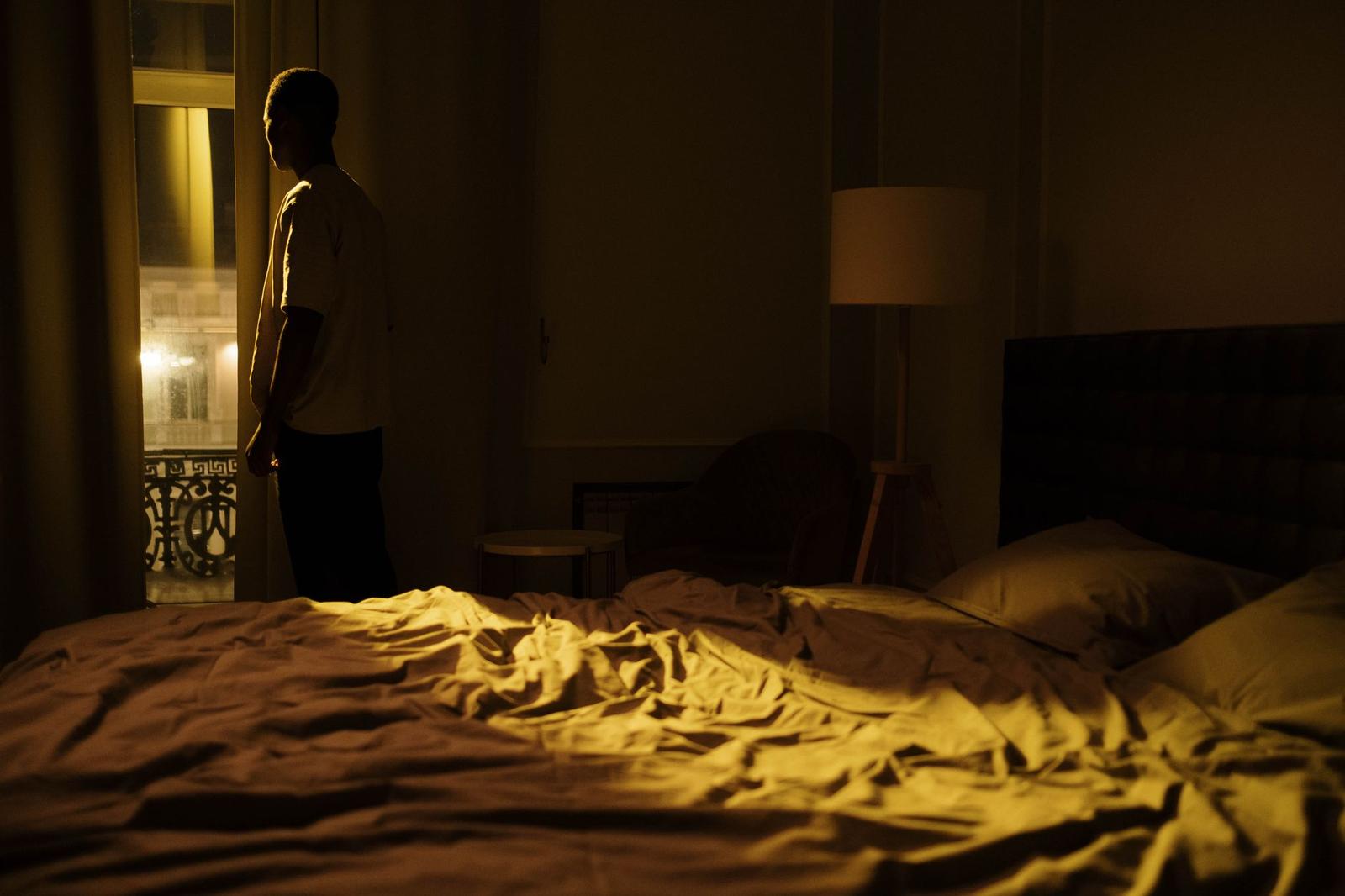
Sleep is breaking down across Eixample, and the data is not subtle. The Spanish Society of Neurology estimated in 2025 that roughly 4 million people in Spain have a chronic sleep disorder, with urban populations showing significantly higher rates than rural ones. Barcelona's Eixample, a grid of 262 blocks crammed with roughly 265,000 residents, sits at the sharp end of every urban sleep risk factor: noise, light pollution, heat, and a social culture that treats midnight as early.
The timing matters because summer 2026 is making things worse. July temperatures in the district regularly top 30°C at 11 p.m., and the neighbourhood's famous Modernista stone blocks, beautiful as they are, trap daytime heat and release it precisely when residents are trying to drop off. The Agència de Salut Pública de Catalunya flagged urban heat islands as a growing health concern in its 2025 annual report, explicitly linking elevated night-time temperatures to fragmented sleep cycles and next-day cardiovascular stress.
What's Actually Keeping Eixample Awake
Three converging factors dominate clinical conversations right now. First, the hormone melatonin, which signals the brain to prepare for sleep, is highly sensitive to light. Passeig de Gràcia alone is lit at an average intensity well above World Health Organisation nighttime street-lighting guidelines, and residents on lower floors of the district's characteristic chamfered-corner buildings report near-constant ambient glow until 2 a.m. or later. Second, social scheduling: the Eixample restaurant circuit, venues along Carrer d'Enric Granados, the pedestrianised rambla-style strip that functions as the neighbourhood's informal living room, routinely fill for dinner sittings at 9:30 p.m. and 10 p.m. Eating a large meal within two hours of sleep is associated with impaired slow-wave sleep, the deepest and most restorative phase. Third, screen exposure: Catalan public health surveys from 2024 found that 67 percent of adults in the 25-45 age bracket report using a smartphone in bed every night.
These are not new problems. What's new is how they compound. A resident who eats late on Enric Granados, walks home past the floodlit facade of the Casa Batlló, scrolls for an hour in bed, and then lies in a room that won't cool below 26°C is stacking four separate melatonin suppressors before midnight. The cumulative effect shortens total sleep time and, crucially, cuts the proportion of REM sleep, which research increasingly links to emotional regulation and immune function.
Where to Start if You Live Here
The practical response doesn't require expensive intervention. The Centre d'Atenció Primària Eixample Esquerra, on Carrer del Comte Borrell, runs a short-course sleep hygiene programme, called Dormir Bé, as part of its general wellness offering, and referrals are free through the Catalan public health card (CatSalut). Spaces for the July cohort filled in under a week when listed in late June, which is itself a measure of local demand.
For those who prefer a non-clinical entry point, the Ateneu Popular de Gràcia runs weekly evening sessions on stress and sleep that include guided body-scan practices; the cost is €5 per session with a sliding scale for low-income residents. The Institut Municipal de Paisatge Urbà also began a voluntary window-shutter rebate programme in 2025, offering up to €150 toward blackout roller blinds for first-floor and second-floor Eixample residents, an acknowledgement, from city government, that managing light is now a public health issue, not just an aesthetic choice.
The simplest interventions remain the cheapest. Consistent wake-up times, even on weekends, do more to anchor circadian rhythm than almost any other single behaviour, according to sleep researchers at the Hospital Clínic de Barcelona. Cutting screen light for 45 minutes before bed and moving the last meal to before 8:30 p.m. are changes residents can make tonight. Consulting a GP at a local CAP is the right move for anyone who has been struggling for more than three weeks, chronic insomnia has clinical definitions and clinical treatments that go well beyond lifestyle tweaks.
Eixample isn't going to dim its streetlights or close its restaurants at 8 p.m. But the residents who understand exactly why the neighbourhood works against sleep are the ones best positioned to fight back.